About the Project
Project title: Connecting Croatia: Advancing Sustainable, Green, and Inclusive Transport through Effective Legal Regulation
Project acronym: CroConnect
Project number: uniri-iz-25-99
Project financing: European Union – NextGenerationEU
Project duration: 1 October 2025 – 30 September 2029
Total value of the project (EUR): 47.145,61
Legal disclaimer: The project has been funded by the European Union – NextGenerationEU. The views and opinions expressed are solely those of the author and do not necessarily reflect the official position of the European Union or the European Commission. Neither the European Union nor the European Commission can be held responsible for them.

Project Leader
Name and surname: Assoc. Prof. Iva Tuhtan Grgić
E-mail: iva.tuhtan.grgic@uniri.hr
Project Team Members
- prof. dr. sc. Dorotea Ćorić, dorotea.coric@uniri.hr
- prof. dr. sc. Emilia Mišćenić, emilia.miscenic@uniri.hr
- prof. dr. sc. Vlatka Butorac Malnar, vlatka.butorac@uniri.hr
- izv. prof. dr. sc. Danijela Vrbljanac, danijela.vrbljanac@uniri.hr
- izv. prof. dr. sc. Iva Savić, iva.savic@pravo.hr
- nasl. izv. prof. dr. sc. Adriana Vincenca Padovan, avpadovan@hazu.hr
- izv. prof. dr. sc. Daniele Casciano, daniele.casciano@uniud.it
- dr. sc. Zuzanna Pepłowska-Dąbrowska, zpeplow@gmail.com
- dr. sc. Darja Lončar, darja.loncar.dusanovic@gmail.com
- Marijana Liszt, marijana.liszt@lipo.hr
- Agata Dajčić, agata.dajcic@uniri.hr
- Elson Thana, elsonth@yahoo.com
Project Description
The project “Connecting Croatia: Advancing Sustainable, Green, and Inclusive Transport through Effective Legal Regulation” is of immense legal, political, and economic importance for strengthening the regulatory framework and transport policy of the Republic of Croatia. The significance of the topic arises, on one hand, from the EU’s strategic commitment to the digital and green transition of the European Single Transport Area. On the other hand, according to the European Commission’s 2024 study on trends and issues in transport, Croatia, despite being strategically and geographically one of the key transport hubs in the EU, ranks at the bottom within the EU in achieving the set objectives. The digital and green transition introduces a range of legal challenges into the already complex transport system, such as the need to protect the privacy and personal data of all stakeholders, the need to develop an entire legal framework for the successful introduction of autonomous vehicles and vessels, a unified legal framework to enable the effective use of digital technologies in transport at the EU level, efficient regulation to ban greenwashing, a regulatory framework to reduce gas emissions and introduce a circular economy, while simultaneously ensuring effective market competition within the internal market.
Project goals:
Bearing these challenges in mind, the project has three main objectives:
- to conduct a comprehensive analysis of the regulatory framework,
- to identify challenges and weaknesses in the Croatian legal framework, and
- to propose legal solutions of high standard that are also sustainable in the long term. These solutions a prerequisite for the creation of a sustainable, green, and inclusive transport system and strengthening the position of the Republic of Croatia in the Single European Transport Area.
Expected results:
- The sustainability of the project results is ensured through a dissemination strategy, as well as through the application and further development of the research outcomes. The project results will continue to be used through several key channels. The results are planned to be published in open access, thereby ensuring that all stakeholders have access to the research findings, de lege ferenda proposals, and recommendations addressed to actors in the transport sector. Therefore, in addition to the academic community, the main long-term and sustainable users of the project results are expected to be institutional bodies of the Republic of Croatia and key economic stakeholders in the transport sector.
- The ambitiously designed work plan contributes to all strategic programme objectives, but above all to the strategic goal of enhancing scientific excellence. The research will enable the identification of contentious areas, which will serve as a basis for submitting one or more competitive scientific research projects. The academic community will benefit through round tables, conferences, and a series of presentations. This will also contribute to strengthening the international network of researchers, which is important for future collaborations through the activities of faculty departments and professional associations in cooperation with the business sector.
- The third project objective is to develop and propose adequate legal solutions aimed at improving the regulatory framework. It is therefore expected that the primary users of the project results will be government institutions, regulatory bodies, and legislative authorities, which will be able to use these outcomes to align national regulations with EU policies. The sustainability of results in this area is planned to be ensured through cooperation with relevant institutions. The project publications will also include recommendations for harmonising national court practice with EU law, thereby contributing to the achievement of legal certainty.
- Private sector stakeholders will be able to use the project results in their day-to-day operations to align their business practices with the new legislative framework and to develop relevant autonomous rules, contributing to the sustainable development of the transport sector and the reduction of its environmental footprint. Finally, through science communication and outreach activities, the project will contribute to raising legal awareness and educating consumers about their rights and obligations in the transport sector. Furthermore, the introduction of a new university course will support the education of future generations of legal professionals in this field.
Key words:
- transport, sustainability, green transition, digital transition, smart mobility, Single European Transport Area
Project Results
Presentations
Emilia Mišćenić, “Automated Vehicles at the Crossroads: Law, Policy and Deployment in Transition”, 9th Petar Šarčević International Scientific Conference, University of Rijeka, Faculty of Law
On 13–14 November 2025, Prof. Emilia Mišćenić presented at the 9th Petar Šarčević International Scientific Conference, held at University of Rijeka, Faculty of Law, titled “Automated Vehicles at the Crossroads: Law, Policy and Deployment in Transition.” her research on consumer vulnerability to certain aspects of unfair commercial practices in the context of autonomous vehicles.
Terms such as “autopilot,” “self-driving,” and “fully driverless” are often misleading consumers regarding the technological capabilities and safety of automated vehicles, which makes them vulnerable to high safety risks. Emilia Mišćenić concluded that it is time to address these issues more systematically under the EU Unfair Commercial Practices Directive (UCPD) and to update the regulatory framework to better protect consumers in the context of automated mobility.
Danijela Vrbljanac, “Driven by Data: Safeguarding Personal Data in Autonomous Vehicles System”, 9th Petar Šarčević International Scientific Conference, University of Rijeka, Faculty of Law
In her lecture, Assoc. Prof. Dr. Danijela Vrbljanac examined the growing risks that autonomous vehicle systems pose to personal data protection, with a particular emphasis on challenges related to lawful data processing bases. She highlighted several examples of problematic practices, including Tesla’s Sentry Mode, illustrating how current technologies may fail to meet fundamental data protection requirements.
The lecture underscored that the rapid development of autonomous vehicle ecosystems has introduced a wide range of new stakeholders, complex and often opaque data flows, and overlapping regulatory frameworks. Combined with the technical design of contemporary vehicle systems, these factors make it increasingly difficult to ensure meaningful transparency, one of the core principles of the GDPR, and to guarantee lawful and accountable processing of personal data.
Her presentation opened an important discussion on the need for clearer regulatory guidance, greater technical transparency, and stronger data protection safeguards in the future development of autonomous mobility.
Mišćenić, Emilia, Roundtable on EU Consumer Law in the Courts: a Judicial Dialogue, International Scientific Conference “50 Years of Consumer Law in the European Union: Past, Present, and Future”, Luxembourg, Luksemburg, 21.11.2025-21.11.2025
The International Scientific Conference “50 Years of Consumer Law in the European Union: Past, Present, and Future”, held in Luxembourg, brought together leading experts to reflect on the evolution of EU consumer law and the challenges ahead. Over the years, the CJEU has developed various institutions and principles within its case law to guarantee the effectiveness, or full effect, of EU law.
A central focus of the conference was the judicial dialogue between the CJEU and the courts of the Member States, aimed at ensuring the full effectiveness of EU law in the field of consumer protection. Discussions addressed key topics such as the principles of equivalence and effectiveness, the ex officio application of EU consumer rules, and the impact of CJEU case law and the duty of consistent interpretation on national courts.
Prof. Emilia Mišćenić participated in the conference and took part in insightful and engaging discussions on these important issues.
Conferences
CroConnect suppored the 9th Petar Šarčević International Scientific Conference
Project CroConnect was proud to support the 9th Petar Šarčević International Scientific Conference, “Automated Vehicles at the Crossroads: Law, Policy and Deployment in Transition,” held on 13–14 November 2025 at University of Rijeka, Faculty of Law. The conference brought together leading experts from academia, industry, and public institutions, including representatives from the European Commission, Volkswagen, BMW, RAND Corporation, and other key actors shaping the future of autonomous mobility.
Our team participated both in organisation and with two contributions from our colleagues Emilia Mišćenić and Danijela Vrbljanac. They delivered presentations addressing some of the critical legal and ethical aspects of autonomous vehicles. Their contributions highlighted topics such as consumer vulnerability, ethical implications of automation, and regulatory challenges — underscoring the project’s goal of supporting legal and policy solutions in the field of sustainable transport.
By participating in and supporting the conference, CroConnect works to strengthen the network of academic researchers, industry stakeholders, and policymakers, contributing to the development of a legal framework for sustainable, green, and inclusive transport in Croatia and the EU.
Mobilities, Training and Professional Development of Team Members
Research Mobility of PhD Candidate Agata Dajčić within the CroConnect Programme
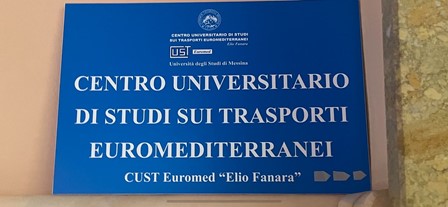
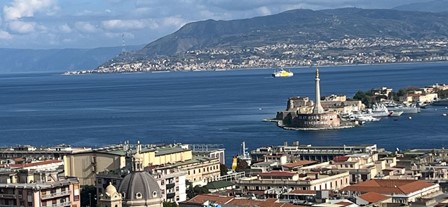
PhD candidate Agata Dajčić, recipient of the Croatian Science Foundation (HRZZ) MOBDOK 2023 scholarship, PhD student at the Faculty of Law in Rijeka, and assistant at the Faculty of Maritime Studies in Rijeka, is currently undertaking a four-month research mobility at the University of Messina (Università degli Studi di Messina, Department of Law „Salvatore Pugliatti”). This mobility is part of her doctoral research on concessions in marinas for nautical tourism.
During her stay in Italy, PhD candidate Agata Dajčić is conducting a comparative study of the Italian legal framework, focusing on the extension of concessions and the regulation of marinas for nautical tourism. The data and analyses collected will contribute to the writing of her doctoral dissertation and provide a direct understanding of different approaches to concession regulation in Europe.
This mobility also provides an opportunity to exchange experiences with colleagues from academia and practice in the field of maritime law, further strengthening the practical and research aspects of her study.
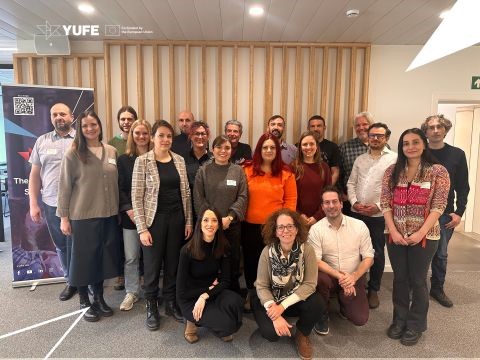
Iva Tuhtan Grgić participated in the YUFE Research Leadership Programme Online (15 December and 16 February) & Brussels, 21–22 January 2026
The Research Leadership Programme was delivered as a blended programme, combining online activities with in-person sessions, and was attended by more than 20 scientists from 10 different universities within the YUFE alliance, representing a wide range of scientific disciplines.
The project leader applied for the programme with the aim of strengthening team management and leadership skills. Throughout the programme, participants engaged with key topics such as leadership styles, communication within diverse research teams, conflict management, and personal leadership development.
The programme proved to be highly engaging and practically oriented, offering valuable insights not only for effective project management, but also for mentoring early-career researchers, particularly in supporting young colleagues during the doctoral thesis writing process. Its interdisciplinary setting and emphasis on self-reflection and peer learning made the experience both eye-opening and directly applicable to everyday academic work.
Professional training and expert meetings
Participation in the Educational Workshop on International Liability and Compensation Regimes for Maritime Accidents
Zagreb, Croatia, 26-27 November 2025
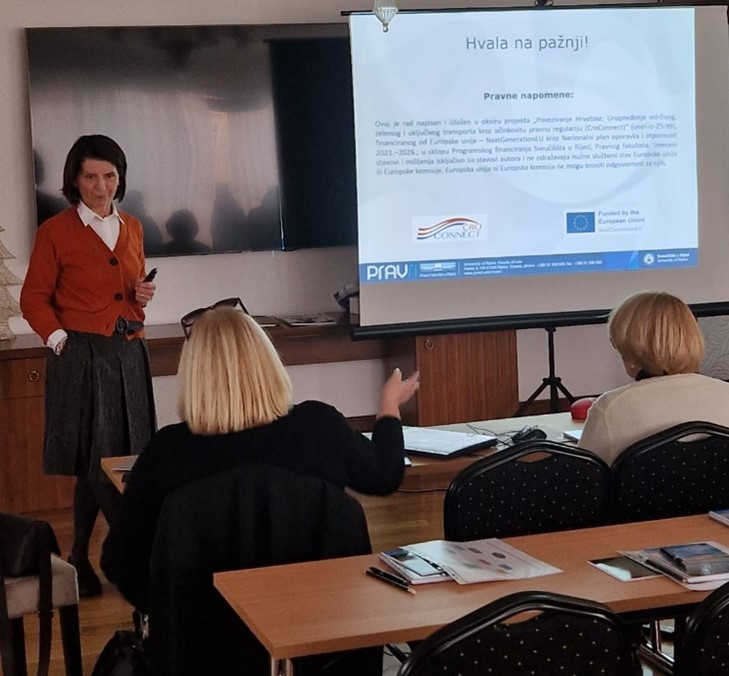
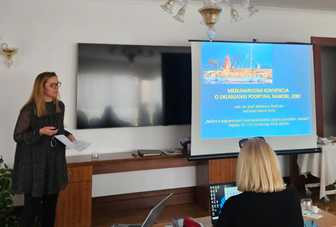
Project collaborators, Prof. Dorotea Ćorić and Assoc. Prof. Adriana V. Padovan, took part in a two-day educational workshop on 26–27 November 2025 in Zagreb. The event, organised by the Croatian Ministry of the Sea, Transport and Infrastructure in cooperation with ATRAC (Adriatic Training and Research Centre), was entitled “Liability and Compensation Regimes for Damage Resulting from Maritime Accidents” and aimed to provide specialised education on international liability and damage-compensation frameworks in maritime law.
Prof. Dr. Sc. Dorotea Ćorić delivered a three-hour lecture on the key international civil liability regimes for marine pollution from ships and discussed how these regimes are implemented in Croatian maritime legislation.
Adriana V. Padovan, PhD, delivered a two-hour lecture on the International Convention on the Removal of Wrecks and its application in the Republic of Croatia, focusing on regulatory and practical aspects.
Participation in the Judicial Conference of Judges and Judicial Advisers of the High Commercial Court of Croatia and Commercial Courts
Lovran, Croatia, 4-5 December 2025
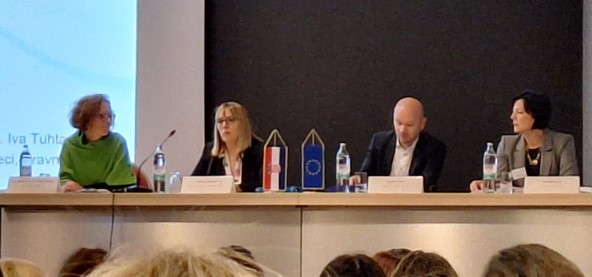
Project Leader, Prof. Iva Tuhtan Grgić participated in the Judicial Conference organized by the High Commercial Court of the Republic of Croatia and the Judicial Academy, held on December 4–5, 2025, in Lovran. During the conference, she delivered a presentation on the Convention on the Contract for the International Carriage of Goods by Road (CMR), and subsequently took part in apanel discussion on the application of the CMR Convention in Croatia, where the focus was on current judicial practice and possible and desirable directions for its development. The presentation facilitated the exchange of professional experiences with colleagues from the judiciary and contributed to a practical understanding of the application of the CMR Convention in the national context.
Educational programs
Within the framework of the project “Connecting Croatia”, the BIP Passenger Rights in Motion has officially commenced
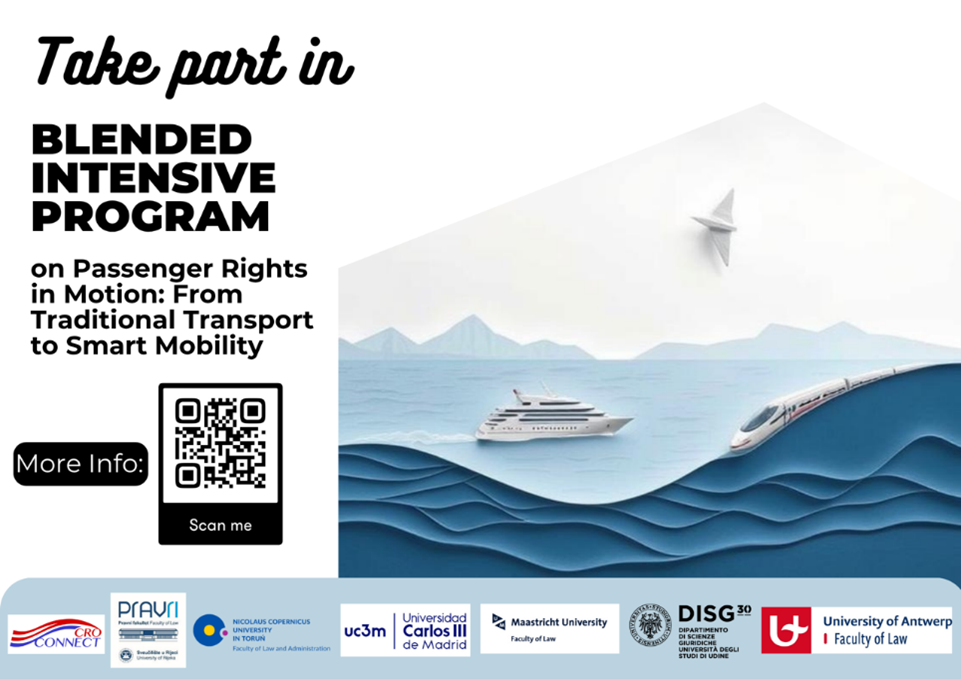
Within the project “Connecting Croatia: Advancing Sustainable, Green and Inclusive Transport through Effective Legal Regulation”, the Blended Intensive Programme (BIP) Passenger Rights in Motion: From Traditional Transport to Smart Mobility has officially commenced.
The programme represents a comprehensive course covering the development of passenger rights – from traditional rights across all modes of transport (air, rail, road and maritime) to new forms of mobility and the concept of smart mobility. Particular attention is given to the legal challenges arising from digital transformation and the green transition of the transport system.
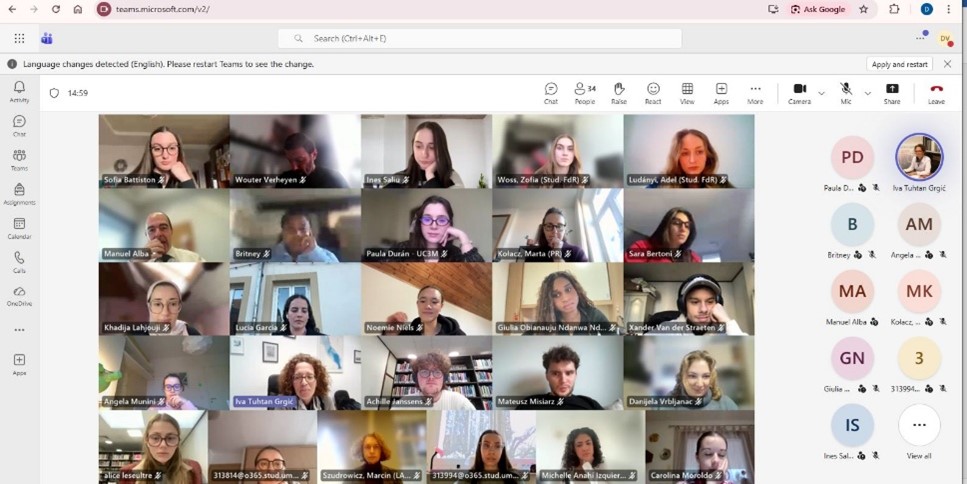
The BIP brings together eight lecturers and twenty-eight students from all six partner institutions – the University of Rijeka, Nicolaus Copernicus University in Toruń, the University of Udine, the University of Antwerp, Universidad Carlos III de Madrid and Maastricht University. The strong international composition of participants enables the exchange of diverse legal approaches, fosters comparative legal thinking, and contributes to the creation of lasting academic and professional connections.
In this way, the project fulfils one of its key objectives: the transfer of knowledge and the education of new generations of lawyers in the field of sustainable, green and inclusive transport.
Members of the project team actively involved in the design and implementation of the BIP include Iva Tuhtan Grgić and Danijela Vrbljanac, Zuzanna Pepłowska-Dąbrowska and Daniele Casciano, as well as lecturers from partner institutions – Wouter Verheyen, Manuel Alba Fernández, Juan Pablo Rodríguez Delgado, and Marta Kołacz.