
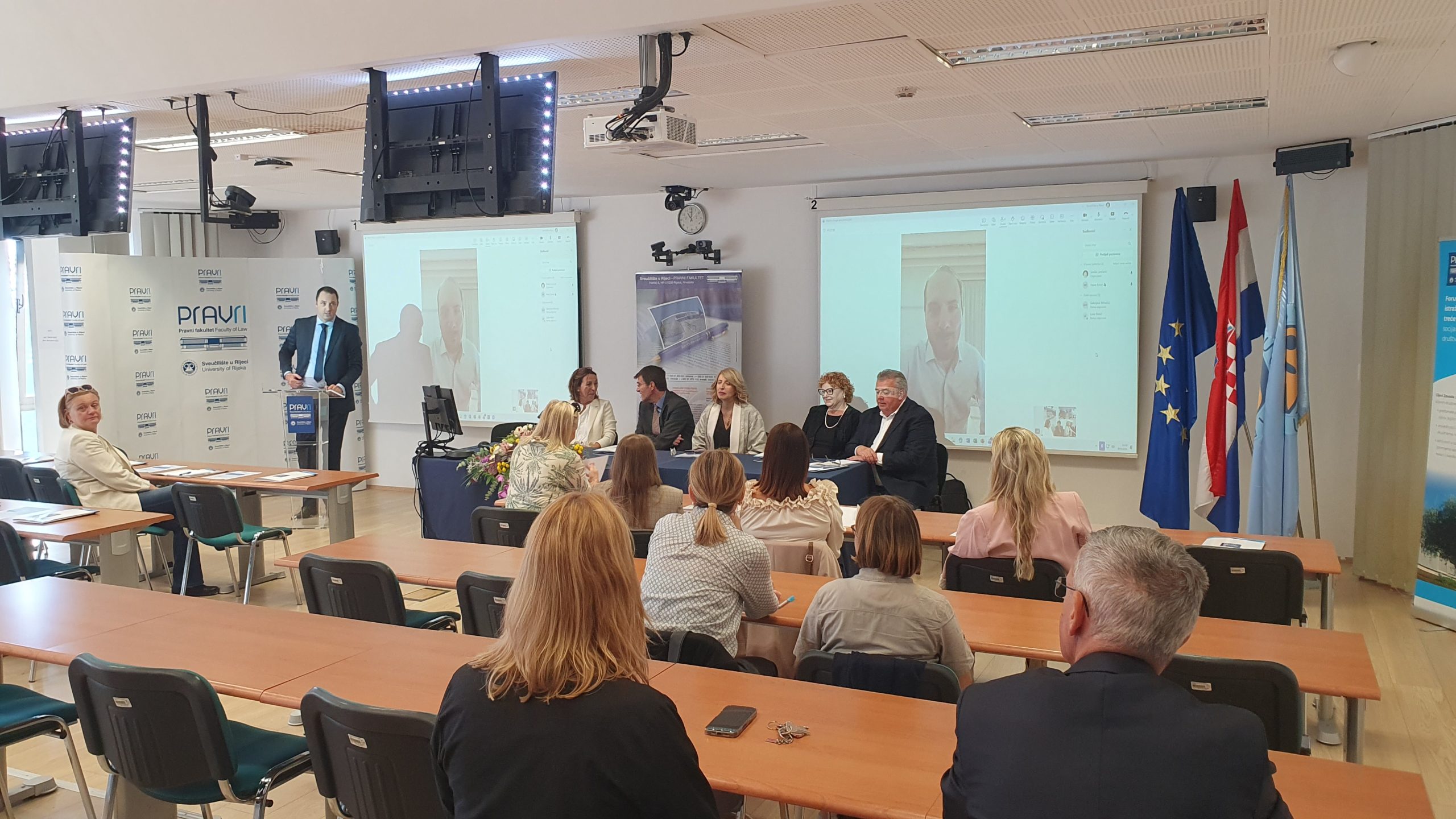
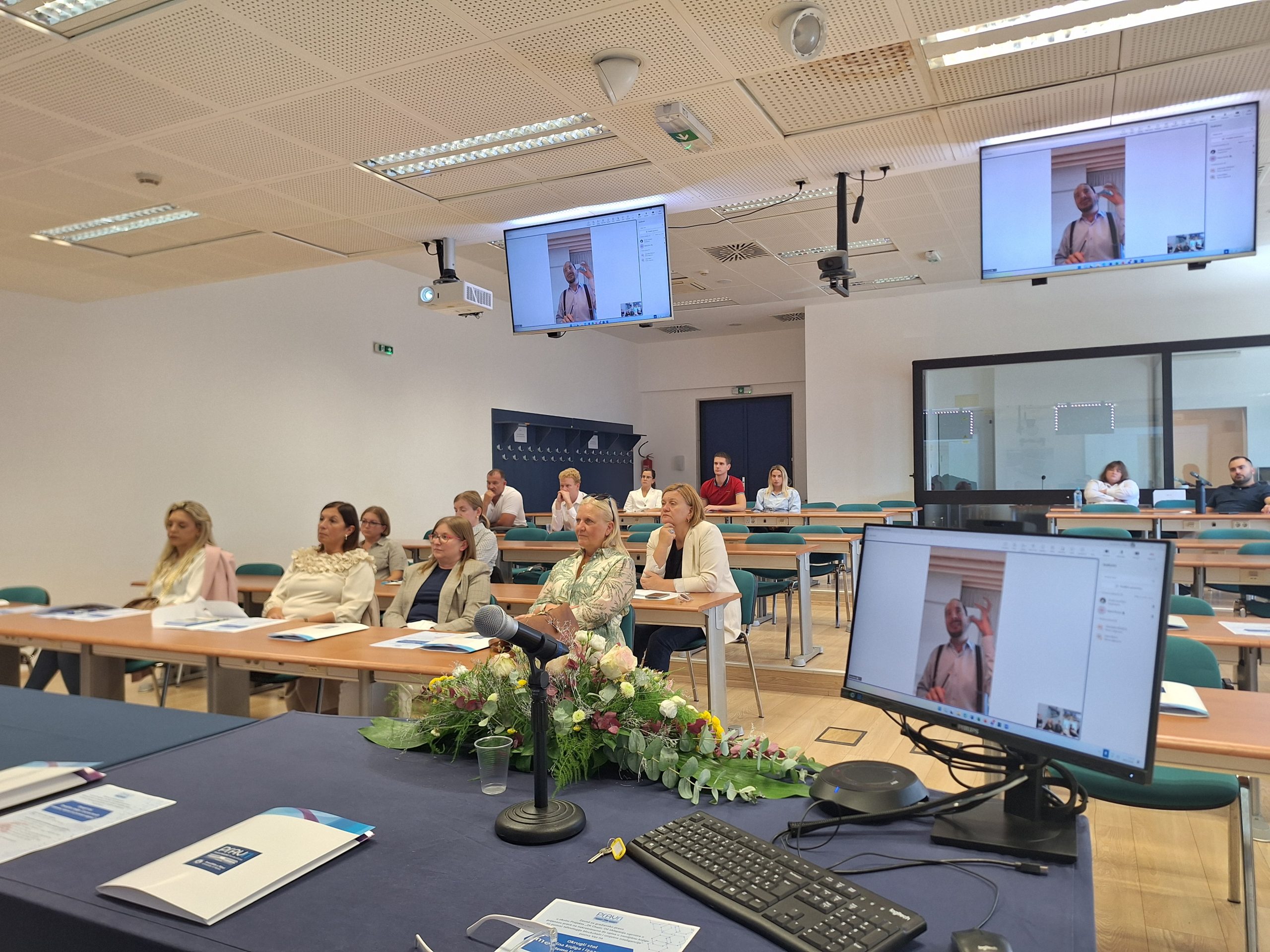
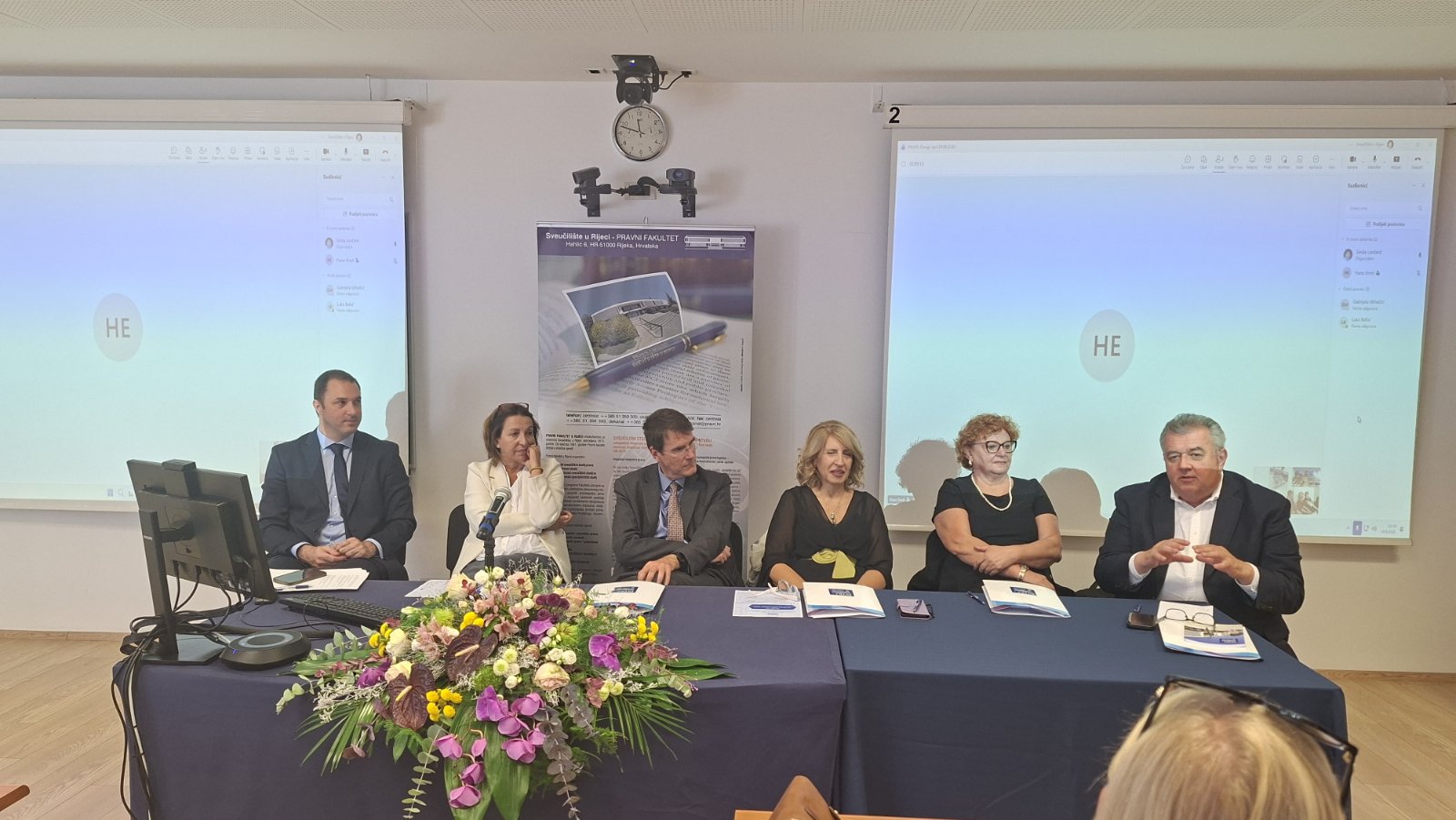
On September 29, 2026, the Faculty of Law in Rijeka hosted a round table titled „Land Register and the Challenges of Modern Times: Are We Heading in the Right Direction?“, organized by the Department of Civil Law as part of the project „ZK Chain: From the Execution of Real Estate Transfer Contracts to Land Register Entry via Blockchain and Artificial Intelligence“.
The round table was opened by Asst. Prof. Dr. Josip Dešić, Project Leader, who presented the project’s objectives and research framework. He highlighted the importance of exploring the application of artificial intelligence and blockchain technology in land register management to enhance the efficiency, security, and transparency of real estate transfer procedures.
The event was moderated by Prof. Dr. Gabrijela Mihelčić, Head of the Department of Civil Law.
Assoc. Prof. Elisabetta Corapi from the University of Rome Tor Vergata presented the Italian dual real estate publicity system, focusing on the relationship between the transcription system and the land register system. From a comparative perspective, she addressed the potential applications of blockchain technology and smart contracts in real estate publicity. She particularly emphasized the role of public notaries and courts in ensuring legal certainty, as well as the limitations of fully automating real estate title transfers.
Prof. Dr. Saša Nikšić from the Faculty of Law in Zagreb analyzed the interplay between contract law, property law, and land registration law in the context of land register digitization. He reflected on the possibilities of electronic contracting, electronic documents, and signatures, as well as the open legal questions arising from the digitization of real estate transactions.
Zinka Bulka, a retired judge with extensive experience in handling civil and particularly land registry cases, discussed the practical aspects of applying land registry regulations in the context of digitization, with an emphasis on Article 105 of the Land Register Act.
Damir Kontrec, Judge of the Supreme Court of the Republic of Croatia and former long-standing President of its Civil Department, analyzed practical issues within the land registry system from the perspective of judicial practice. He stressed that artificial intelligence in land registration procedures can strictly be used as an auxiliary tool, but never as a replacement for a judge. Furthermore, he highlighted the vital importance of maintaining cybersecurity within such a digital system.
Prof. Dr. Hano Ernst from the Faculty of Law in Zagreb offered a comparative legal perspective, focusing on the Swedish land registry system and the feasibility of implementing blockchain technology in land registry law.
The round table provided a platform for exchanging scientific and professional insights into the future of the land registry system, with a special focus on digitization challenges, comparative experiences, and the possibilities and limits of blockchain and artificial intelligence applications. The discussion further confirmed the importance of bridging legal theory and practical experience when contemplating the future development of the land registry system.
This round table has been organised within the scope of the project „ZK Chain” (uniri-mz-25-46), funded by European Union – NextGenerationEU via the Croatian National Recovery and Resilience Plan 2021-2026, in conjunction with the University of Rijeka, Faculty of Law Programme Financing. The views and opinions expressed are solely those of the authors and do not necessarily reflect the official position of the European Union or the European Commission. Neither the European Union nor the European Commission can be held responsible for them.